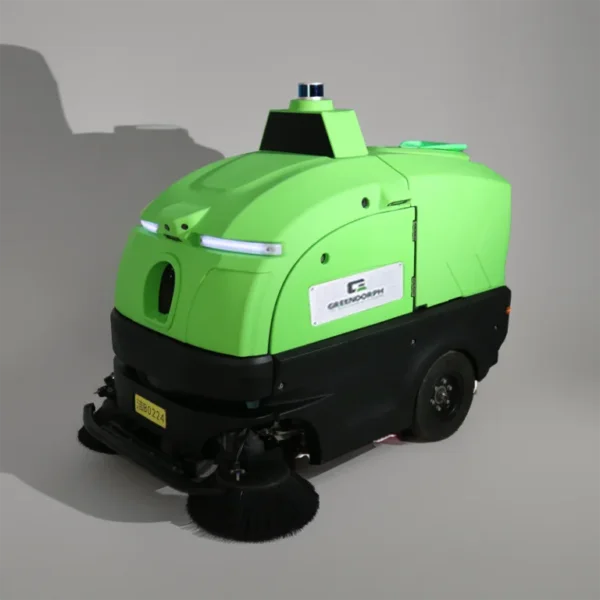
Managing high-traffic commercial spaces requires a systematic approach to surface friction, dust control, and structural pavement preservation. Large environments like transport hubs, public walkways, and education campuses face constant exposure to abrasive sand, dirt, and organic litter. If left unmanaged, these fine particles act like sandpaper under heavy foot traffic, gradually grinding down protective floor coatings and sealants. Utilizing a professional-grade hard floor cleaner machine allows facility managers to implement a predictable, data-driven routine to protect physical property assets.
Every expansive commercial layout presents unique architectural variables, from wide concrete plazas to tight building entryways and indoor transit corridors. Traditional manual sweeping or dragging basic push brooms cannot match the scale of large public acreage, often leading to inconsistent results. By analyzing critical machine parameters—such as mechanical brush downpressure consistency, smart water recovery systems, and automated navigation paths—operations teams can transform their maintenance loops.
Understanding Debris Capture Dynamics on Coarse Commercial Pavements
High-traffic public zones accumulate a demanding mixture of loose gravel, fine silica dust, paper litter, and seasonal leaves daily. A cleaning setup must generate sufficient mechanical friction and airflow velocity to lift these diverse materials cleanly in a single pass. Standard commercial equipment often experiences premature brush wear or suction drop when facing varied outdoor waste configurations without pre-sorting.
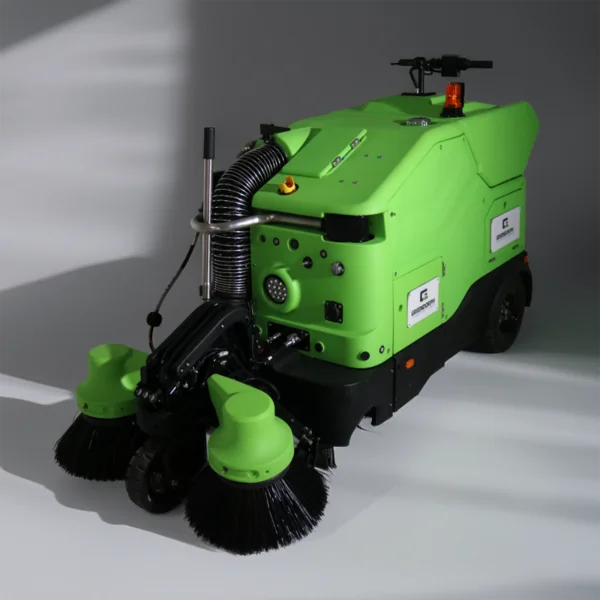
We focus on building collection systems that handle a wide range of waste materials without manual pre-sorting. Greendorph’s high-torque brushes are engineered to pick up everything from heavy debris to fine dust effectively. As a result, busy transit lanes stay clear, helping maintain smooth and predictable traffic flow throughout the day.
Mitigating Fine Silica Dust to Protect Communal Air Quality
Dry sweeping across outdoor plazas or stone pathways can easily launch massive dust clouds, creating immediate respiratory discomfort for pedestrians. Commercial facility operations must prioritize high-efficiency filtration systems that capture fine silica and carbon soot securely instead of venting them back into the air. Investing in advanced floor cleaning machines enables effective capture of these micro-particles, safeguarding employee well-being and maintaining a clean working environment.
High-performance fabric filters keep fine concrete and chemical dust particles remain sealed within the machine during long shifts. We optimize these internal filtration paths to guarantee that exhaust air remains remarkably fresh and clear. This strict focus on air quality metrics makes automated vacuum systems perfectly suited for indoor transit hubs and crowded open-air public plazas.
Deploying Fully Autonomous Technology across Sprawling Layouts
Managing extensive acreage with a lean maintenance workforce requires a thoughtful shift toward intelligent fleet automation. Traditional human-guided sweepers often skip corners or pass over the same sections repeatedly, leading to uneven surface wear and wasted energy. Integrating high-precision spatial mapping sensors resolves this coverage issue by ensuring that every square meter of the property is systematically cleaned.
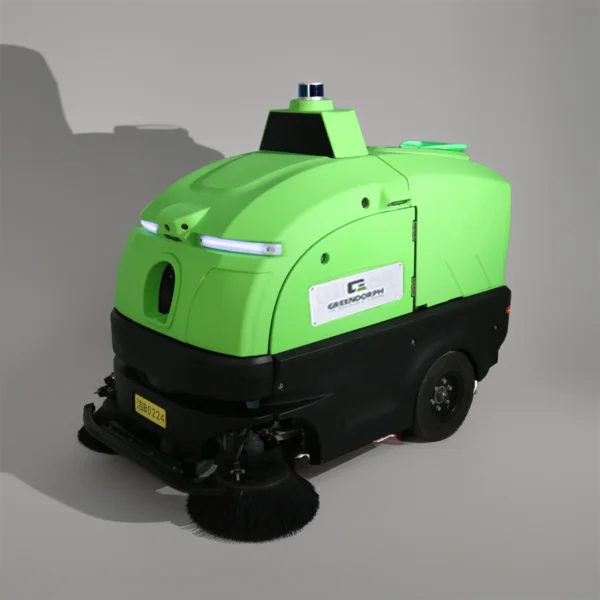
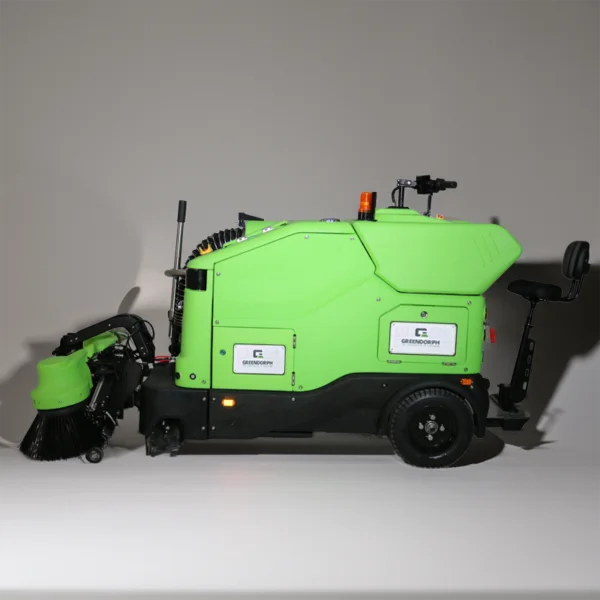
Our advanced Greendorph Auto Sweeper YJ130 showcases how automation solves heavy dust accumulation under demanding real-world conditions. This fully-autonomous cleaning equipment handles navigation and obstacle avoidance on its own, requiring minimal manual supervision during active cleaning. This reliable performance sustains consistent cleaning outcomes while keeping your facility’s daily labor allocation highly productive.
Adapting Agile Physical Footprints for Restrictive Path Bottlenecks
Restricted public walkways, narrow courtyard paths, and busy building entrances present major navigation challenges for large utility vehicles. Bulky sweeping machinery risks colliding with decorative landscaping walls, blocking private doorways, or disrupting the peaceful environment. Ground teams require compact, highly agile utility platforms engineered to navigate around delicate outdoor benches and unexpected path barriers smoothly.
Our compact autonomous chassis designs incorporate advanced steering setups that allow our specialized floor cleaning machines to spin in place safely. This agile configuration allows the machine to clean right up to the edge of concrete barriers and access tight community plazas. This precision navigation enables hard-to-reach corners receive a deep, thorough clean without requiring any manual human steering.
Optimizing Moisture Recovery and Surface Drying Mechanics
Leaving dirty water puddles behind on busy residential sidewalks or building entrances creates immediate slip hazards for residents and reduces foot traffic safety. A highly efficient sanitation cycle relies on a heavy-duty squeegee assembly working in close sync with a powerful vacuum motor. This combination pulls the dirty slurry off the concrete effectively, leaving the walkway drier and ready for use.
Operating a high-capacity hard floor cleaner machine facilitates even distribution of clean wash water and potent detergent over your whole floor layout. Our specialized vacuum systems generate high suction velocity, pulling water even from deep expansion joints and concrete crevices. This rapid moisture containment prevents slip-and-fall incidents, keeping daily community foot traffic moving safely and smoothly.
Battery-Electric Platforms Enable Flexible Sanitation Timetables for Public Venues
Public campuses, transit hubs and open plazas maintain continuous visitor flow from early morning until evening. Conventional fuel-powered sweepers generate exhaust pollutants and operational interference, restricting cleaning activities to narrow time windows and clashing with peak passenger and student activity. Battery-driven electric drivetrains remove such constraints, supporting sustainable cleaning operations across flexible scheduling windows without interfering with public activities.
Equipped with high-density battery modules, the Greendorph YJ130 autonomous sweeper delivers 6–8 hours of steady runtime per full charge. Purpose-built for educational campuses, transport zones and shared pedestrian spaces, the extended operational window empowers maintenance crews to arrange large-area cleaning during low-occupancy periods, maintaining consistent hygiene standards throughout public facilities.
Streamlined Electric Drive Architecture Stabilises Long-Term Public Facility Operating Budgets
Public venue maintenance programmes operate under fixed annual budget limits and require consistent equipment availability to uphold hygiene standards. Combustion-powered sweepers rely on extensive transmission and hydraulic assemblies vulnerable to accelerated degradation amid pervasive outdoor dust and grit. Unexpected equipment failures lead to unplanned outsourcing or emergency manual cleaning, creating unbudgeted expenditure for facility operators.
Our sweeping equipment adopts brushless direct-drive architecture to cut redundant wearable components. This streamlined mechanical structure removes recurring upkeep tasks exclusive to fuel machinery, including routine engine servicing and hydraulic system inspections. Robust, low-failure design maximises continuous equipment availability, supports stable long-term sanitation planning and delivers sustained reductions in ongoing maintenance expenditure for public arenas.
Conclusion
Commercial sanitation is evolving—automated electric machinery replaces manual brooms with quiet, low-emission efficiency. Lower costs, less water waste, and reliable pavement protection—all in one compact package. We engineer high-performance electric tools that support grounds crews and keep community environments pristine.