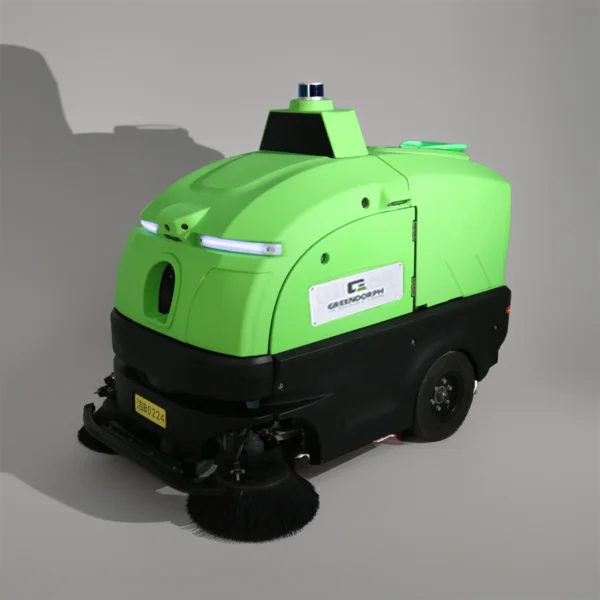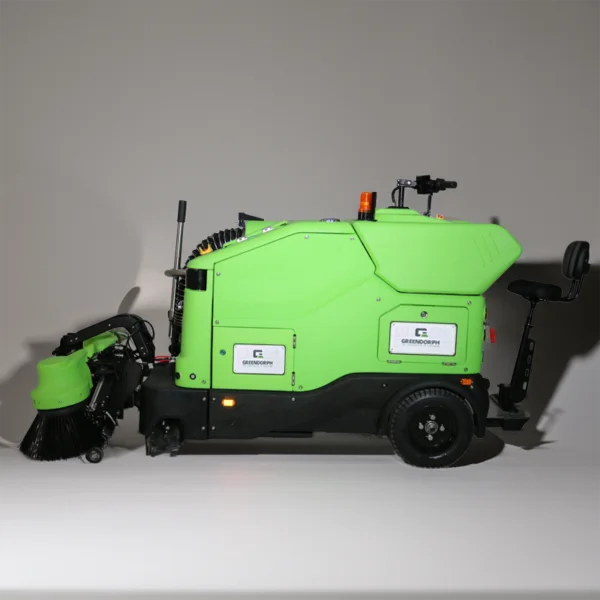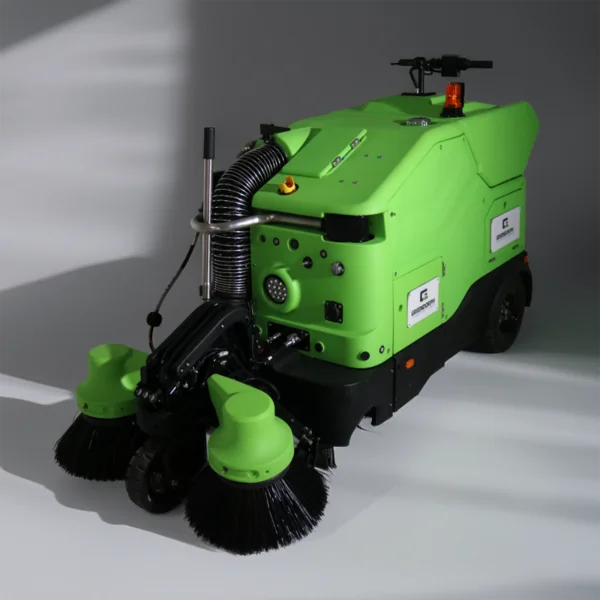
Maintaining consistent surface safety across high-traffic logistics bays, school corridors, and public plazas requires a systematic approach to dirt extraction and moisture control. Daily pedestrian traffic continuously deposits a layer of fine sand, liquid spills, and abrasive debris that can quickly degrade floor sealants. Relying on manual sweeping is slow and produces inconsistent results, often leaving behind slick patches and hidden dust. Integrating a highly responsive robot floor cleaner into daily building operations s complete, repeatable cleaning coverage while protecting the facility’s floor surfaces.
Every commercial layout presents unique architectural variables, from wide-open concrete distribution yards to tight building entryways and indoor transit hallways. Traditional manual mopping routines frequently spread microscopic contaminants rather than lifting them, creating serious slip hazards for staff and visitors. By analyzing critical mechanical features—such as brush downpressure control, vacuum extraction physics, and certified safety electronics—procurement teams can secure reliable long-term hardware.
Understanding the Physics of Automated Surface Friction
Industrial flooring safety depends on keeping a consistent coefficient of friction between pedestrian footwear and the concrete substrate. Fine silica dust and spilled liquids act as micro-layers that break this vital contact, causing sudden traction loss. Mechanical scrubbing solves this issue by using high-torque rotating brushes to strip away these dangerous oily films instantly.
Selecting a certified electric floor scrubber facilitates thorough washing and drying of busy walkways in one efficient pass. This steady mechanical friction breaks down stubborn surface oils and dried chemical grime instantly without scratching protective topical floor sealants. Our team focuses on these surface variables to help facility managers build highly effective, repeatable safety programs.
Dynamic Slurry Removal Preserves Continuous Operational Accessibility
Public and commercial floor maintenance faces a core contradiction: thorough wet scrubbing is required to dissolve oily grime, yet residual moisture inevitably hinders continuous pedestrian and operational flow. Conventional cleaning tools only clear surface water, leaving trapped slurry inside pavement gaps that gradually erode floor materials and create latent slip risks. Modern automated cleaning systems resolve this conflict through synergized scraping and high-speed negative-pressure extraction.
Equipped with optimized airflow structures, our robot floor cleaner achieves deep dewatering across textured concrete, tiled surfaces and expansion joints. The system synchronizes scrubbing, slurry collection and residual water recovery in one integrated workflow. This all-in-one processing eliminates lingering surface moisture, maintains stable floor friction levels, and keeps public zones remain fully usable during ongoing sanitation operations.
Preventing Particulate Dispersion Through Sealed Wet Suppression
Dry sweeping across expansive building lobbies or open plazas often stirs up thick dust clouds, creating immediate respiratory discomfort. Advanced dust control relies on a balanced system that uses fine water misters to bind small particles together right before vacuuming. This wet-suppression mechanism traps fine concrete dust securely inside the collection hopper instead of venting it back into the breathing zone.
Using an advanced electric floor scrubber maintains tight containment of trapped microparticles inside the unit throughout lengthy working cycles. Multi-stage air filtration prevents fine particulate matter from escaping back into public environments, keeping the local air quality clean and healthy. Our design team prioritizes these sealed filtration paths to safeguard indoor environments and sensitive warehouse electronics.
Ensuring Operational Safety and International Regulatory Compliance
Deploying autonomous machinery into busy public areas requires rigorous adherence to international quality and safety standards. Uncertified equipment can pose electrical risks or suffer critical navigation failures, potentially resulting in liability issues or property damage. Utilizing fully tested, internationally recognized hardware supports safe execution of automated cleaning cycles around pedestrians and staff.
Why Choose Greendorph Robot Floor Cleaner? Certified Quality & Reliability. At Greendorph, we design our utility equipment is certified with CE and RCM, guaranteeing safe, reliable, and internationally recognized performance for both indoor and outdoor cleaning applications. These strict quality controls verify that our battery systems and safety sensors meet international benchmarks for continuous daily operation.
Navigating Complex Facilities with Multi-Sensor Path Planning
Narrow inventory aisles, tight assembly bays, and busy shipping entrances present major physical navigation obstacles for oversized cleaning machinery. Bulky sweeping machinery risks colliding with decorative landscaping walls, blocking private doorways, or disrupting the peaceful environment. Ground teams require compact, highly agile utility platforms engineered to navigate around delicate outdoor benches and unexpected path barriers smoothly.
Using a combination of LiDAR, 3D cameras, and ultrasonic sensors allows a modern robot floor cleaner to map its surroundings in real time. This advanced autonomous setup enables flexible obstacle avoidance, ensuring that the equipment moves safely around pedestrians and parked cars. We prioritize precise spatial tracking to keep community operations running smoothly without needing constant manual human steering.
Simplified Electric Mechanical Architecture Improves Fleet Operational Stability
Long-term fleet usability depends on controllable failure rates and low recurring upkeep workloads, two critical weaknesses of traditional fuel-driven cleaning equipment. Multi-stage transmission structures and auxiliary hydraulic components are highly sensitive to industrial dust and outdoor debris, leading to frequent performance attenuation and routine overhaul demands. Such frequent servicing occupies manpower and disrupts standardized cleaning schedules.
Our electric floor scrubber series adopts brushless direct-drive structural design, removing redundant transmission parts and vulnerable hydraulic modules. The simplified mechanical framework greatly reduces daily wear points and eliminates periodic fluid replacement and pipeline maintenance work. Stable mechanical output improves long-term equipment durability, lowers unplanned downtime losses, and creates predictable cost control for facility annual maintenance budgets.
Electric-Driven Mechanical Consistency Standardizes Daily Sanitation Output
The biggest pain point of traditional fuel-powered cleaning fleets lies in unstable mechanical performance throughout the work shift. Combustion engines experience fluctuating power output as fuel levels drop, leading to inconsistent brush speed, variable suction power, and uneven cleaning results across morning and evening shifts. This power instability makes it difficult for facility managers to form fixed, standardized floor care SOPs.
Our battery electric systems deliver steady, constant power output for up to 8 full hours per charge. Unlike fuel equipment with decaying performance, electric drivetrains maintain uniform suction, brush torque and operational efficiency from start to finish. This consistent mechanical output unifies cleaning quality across all zones and shifts, enabling precise, repeatable automated sanitation for long-term facility management.
Conclusion
Achieving high sanitation standards across modern commercial spaces requires replacing manual tools with automated electric utility systems. Implementing a certified, highly maneuverable electric floor scrubber allows property managers to protect floor coatings, control fine dust, and eliminate moisture hazards. These quiet, battery-powered vehicles deliver exceptional cleanliness consistency across expansive public plazas while reducing annual repair and labor expenses significantly. Our team at Greendorph remains fully dedicated to engineering the robust, sustainable electric tools required to support grounds crews and keep global facilities pristine.