Modern public structures—ranging from busy commercial shopping centers to corporate office complexes—experience a continuous influx of foot traffic and outdoor dirt. Daily operations leave behind fine sand, dust, beverage spills, and micro-particles that settle onto high-visibility floors. If neglected, these loose abrasive residues gradually grind down polished stone tiles, leaving paths looking dull and neglected. Deploying a specialized floor cleaning machine automatic system introduces a systematic, continuous method to preserve these delicate flooring assets.
Different architectural zones present distinct challenges, such as wide-open public plazas, narrow retail walkways, and carpet-to-hard-floor transitions. Managing these dynamic spaces using manual labor leads to unpredictable standards, high turnover, and steep operational expenses. By studying the mechanics of automated navigation, power delivery, and remote fleet management, property managers can modernize their maintenance programs. This engineered approach to facility care keeps public pathways consistently clean, safe, and professional.
Navigating Dynamic Obstacles in Busy Retail Shopping Centers
Modern shopping malls feature complex physical layouts packed with temporary promotional displays, seating zones, and constant pedestrian traffic. Traditional ride-on sweepers struggle to maneuver safely within these crowded spaces, often blocking customer flow or risking accidental collisions. Automated systems solve this challenge by using multiple sensors to scan their surroundings continuously.
Integrating LiDAR, depth cameras, and ultrasonic sensors allows a modern robot floor cleaner to adjust its path instantly when pedestrians walk nearby. This real-time situational awareness delivers consistent cleaning coverage, allowing the machine to work safely around shoppers. Our team focuses on refining these responsive navigation systems to keep public walkways clean and inviting.
Optimizing Silent Cleaning Schedules in Corporate Office Complexes
Corporate office facilities require a quiet, professional environment where employees can work without being distracted by loud maintenance noises. Loud combustion engines or low-grade vacuum systems restrict cleaning routines to narrow evening slots, complicating scheduling. Moving to quiet, battery-powered electric motors resolves this conflict, enabling seamless cleaning at any hour.
A low-noise floor cleaning machine automatic unit operates quietly in the background, allowing for flexible daytime cleaning schedules. We insulate our electric blowers and sweeping motors to keep noise outputs remain at highly comfortable decibel levels. This quiet performance allows facility teams to maintain pristine lobby floors without disturbing important business meetings.
Maximizing Daily Operational Endurance with Advanced Power Systems
Keeping up with extensive cleaning routes across massive public transport hubs or airport terminals requires highly reliable energy storage. Standard lead-acid batteries demand regular manual water top-offs and dedicated, well-ventilated charging rooms to handle hazardous gas emissions. Transitioning to advanced lithium iron phosphate batteries reduces these maintenance hassles while providing excellent operational uptime.
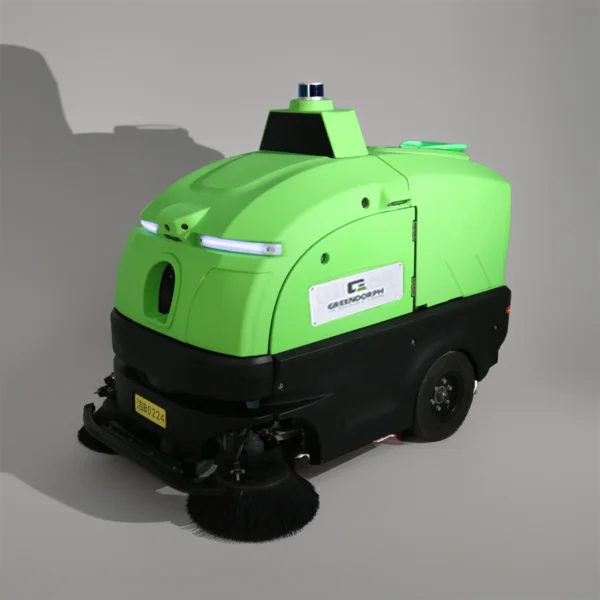
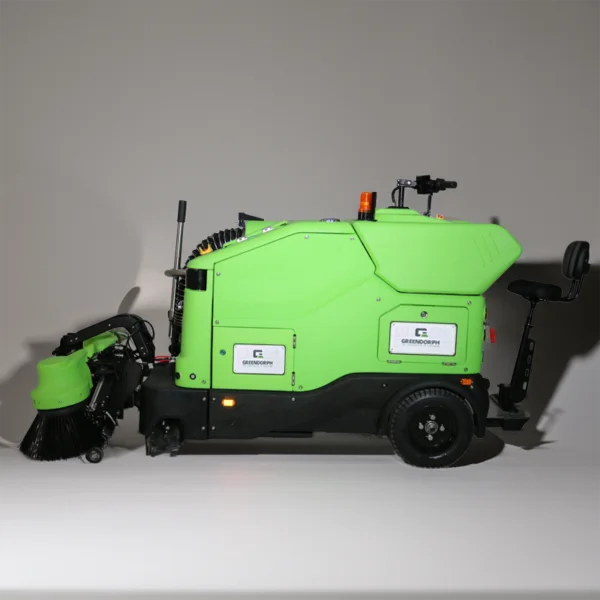
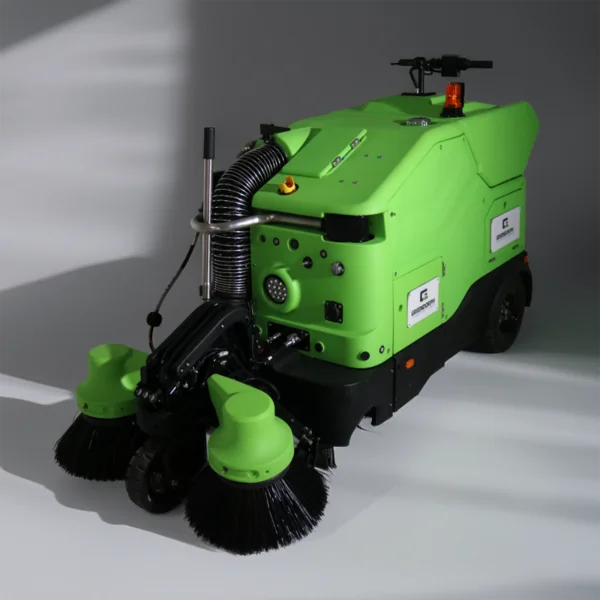
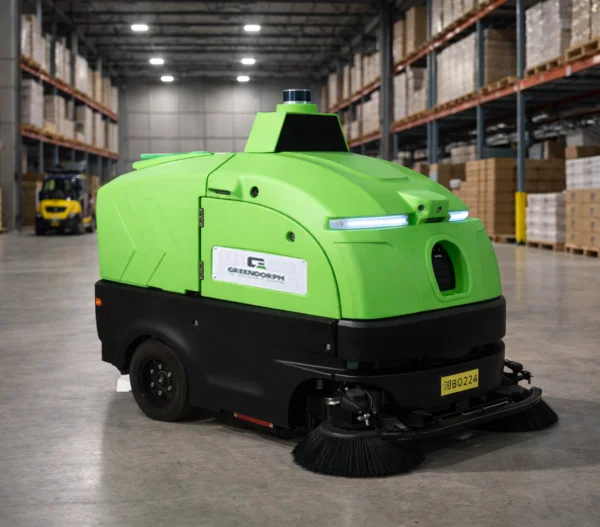
Lithium iron phosphate battery configurations excel at adapting to the fragmented working cycles of commercial facility maintenance. Instead of requiring lengthy dedicated charging sessions that disrupt workflows, the power system supports flexible top-ups during routine operational idle time. Tailored for mixed commercial environments, our Greendorph Omniclean YJ80 semi-autonomous cleaner delivers steady and enduring power output. Its optimized energy performance adapts to alternating indoor and outdoor cleaning tasks, supporting continuous daily maintenance workflows and adapting to the irregular operational rhythms of public and corporate venues.
Mitigating Dust Storms to Protect High-Volume Public Buildings
Sweeping dry hard floors in busy public structures can easily stir up fine particulate matter, creating inhalation hazards for visitors. Advanced dust control relies on a balanced system that uses fine water mist to settle dust before vacuuming it. This dual-action system traps microscopic particles inside the collection hopper instead of letting them escape into the air.
Using high-performance filters keep fine concrete or drywall dust remains sealed within the machine during operation. At Greendorph, we prioritize clean-air filtration systems to help facilities maintain excellent indoor air quality. This clean approach to dust control keeps the surrounding air fresh, comfortable, and healthy for your building’s occupants.
Leveraging Remote Telemetry to Track Fleet Performance
Managing a large facility often means supervising multiple cleaning assets across different floors, wings, or entire building complexes. Without real-time tracking, it is incredibly difficult for managers to verify which areas have been cleaned or identify sudden mechanical faults. Modern fleet management utilizes advanced remote monitoring platforms to provide total visibility over your daily operations.
Using smart wireless telemetry allows operators to check machine runtimes, water levels, and cleaning maps from any mobile device. We incorporate optional remote monitoring systems into our designs to help managers track usage, maintenance, and performance, optimizing cleaning operations while reducing downtime. This cloud-based data tracking maintains high and unified cleaning standards for all sites.
Reducing Mechanical Complexity to Save on Annual Repair Budgets
Traditional internal combustion sweeping trucks feature complex hydraulic lines, belts, and fluid reservoirs that require frequent, specialized maintenance. Dusty operating conditions accelerate wear on these moving parts, leading to hydraulic leaks, sudden breakdowns, and expensive repair bills. Transitioning to direct-drive electric systems simplifies the mechanical footprint and prevents these frustrating maintenance issues.
Commercial cleaning equipment operating in dusty public venues requires robust, low-maintenance power drive systems to sustain long-term operation. Our commercial cleaners adopt premium brushless electric drive structures, which reduce mechanical wear points vulnerable to dust abrasion and daily operational impact. This innovative structural design avoids the routine upkeep demands of fossil fuel-powered equipment and complex hydraulic assemblies. With fewer wearable components and lower environmental sensitivity, the equipment maintains stable operating states in harsh cleaning environments, effectively cutting long-term facility maintenance overhead and reducing unplanned equipment downtime.
Integrating Smart Automation to Resolve Persistent Labor Shortages
The commercial cleaning industry continues to face high staff turnover and persistent labor shortages for demanding, repetitive floor-cleaning roles. Manual sweeping is physically exhausting and exposes workers to potential roadside hazards and harsh weather. Integrating a smart robot floor cleaner allows managers to automate these tedious tasks, ensuring consistent floor care every day.
Our advanced autonomous machines handle navigation, self-charging, and automated dumping effectively on their own, requiring minimal manual supervision. This reliable performance sustains consistent cleaning outcomes while keeping your facility’s daily labor allocation highly efficient. Partnering with our specialized team helps commercial properties run smooth, predictable, and worry-free maintenance programs.
Conclusion
Successfully managing public and corporate facilities requires a transition toward modern, electric-powered, and automated floor care. Upgrading to quiet, low-carbon machinery helps properties lower fuel expenses, protect delicate flooring, and eliminate tailpipe emissions. Incorporating smart remote monitoring maintains peak operational efficiency for your fleet and cuts maintenance downtime to a minimum. At Greendorph, we are dedicated to developing reliable autonomous solutions that streamline facility maintenance for commercial and industrial sites with practical, sustainable, efficient performance.