Managing the everyday safety of high-traffic commercial spaces requires a systematic approach to surface friction and liquid containment. Daily transit lanes continuously collect a hidden layer of fine dust, oily residues, and moisture that compromises pedestrian traction. Leaving these contaminants untreated risks slip incidents and accelerates the mechanical wear of expensive subfloor materials. Choosing a reliable floor scrubber manufacturer helps procurement managers acquire calibrated machinery capable of maintaining optimal surface conditions.
Sprawling public infrastructures present varied layout conditions, ranging from smooth indoor polished stone to rough outdoor concrete walkways. Standard manual mops frequently spread dirt rather than extracting it, leaving behind slippery water puddles and chemical streaks. By focusing on mechanical brush pressure, fast vacuum extraction, and advanced filtration setups, operations teams can implement highly predictable floor care routines. Selecting advanced floor cleaning machines protects valuable real estate assets while optimizing annual utility maintenance budgets.
Deciphering the Physics of Surface Friction and Slip Prevention
Industrial flooring safety depends on keeping a consistent coefficient of friction between pedestrian footwear and the concrete substrate. Fine silica dust and spilled liquids act as micro-layers that break this vital contact, causing sudden traction loss. Mechanical scrubbing solves this issue by using high-torque rotating brushes to strip away these dangerous oily films instantly.
Working alongside a certified floor scrubber manufacturer allows facilities to match brush textures precisely with their local flooring materials. This technical pairing achieves deep dirt removal without scratching or wearing down protective topical sealants over time. Our team focuses on these surface variables to help facility managers build highly effective safety programs.
Optimizing Moisture Extraction via High-Velocity Negative Pressure
Dirty wastewater left on public paths poses safety risks and may damage adjacent drywall bases. A reliable drying system pairs a heavy-duty squeegee with a powerful vacuum to remove the slurry promptly, leaving the surface dry enough for pedestrians within minutes under normal conditions.
Deploying specialized floor cleaning machines allows maintenance crews to wash and dry busy transport corridors without blocking public access. Our high-velocity negative-pressure channels pull moisture even from deep concrete expansion joints and textured tile grout lines. This instant moisture containment keeps public walkways safe and open throughout the busiest hours of the day.
Mitigating Particulate Clouds Through Targeted Wet Suppression
Dry sweeping across expansive building lobbies or open plazas often stirs up thick dust clouds, creating immediate respiratory discomfort. Advanced dust control relies on a balanced system that uses fine water misters to bind small particles together right before vacuuming. This wet-suppression mechanism traps fine concrete dust securely inside the collection hopper instead of venting it back into the breathing zone.
High-performance floor cleaning machine platforms lock collected microparticles securely inside the unit throughout extended working hours. Multi-stage air filtration prevents fine particulate matter from escaping back into public environments, keeping the local air quality clean and healthy. Our design team prioritizes these sealed filtration paths to safeguard indoor environments and sensitive warehouse electronics.
Adapting Multi-Functional Designs for Variable Facility Zones
Commercial estates often feature complex layout transitions, shifting from open-air concrete parking bays to highly polished indoor walkways. Managing these diverse areas traditionally required operating several different specialized utility platforms, which increased total machinery expenses. Transitioning to a single, highly adaptable utility vehicle streamlines facility operations and simplifies training requirements for ground crews.
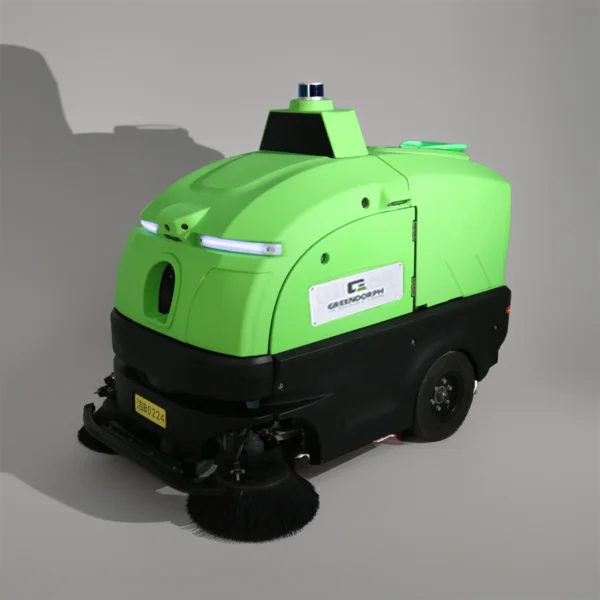
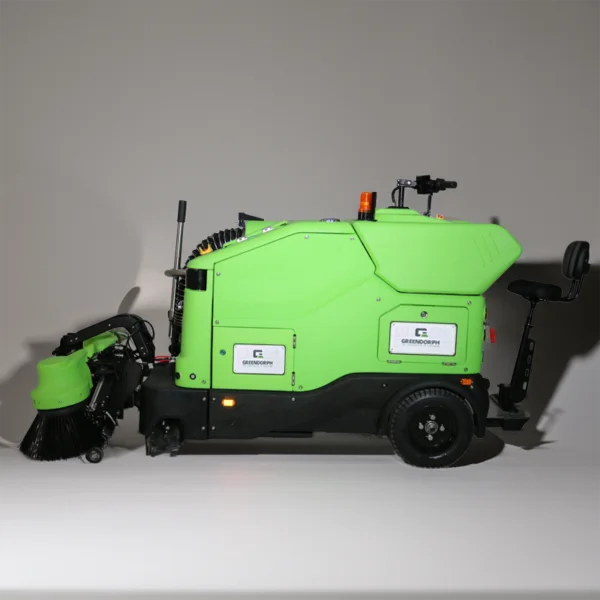
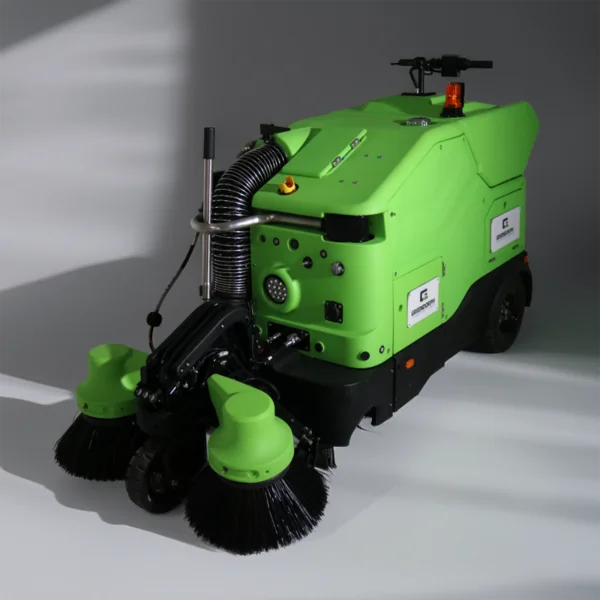
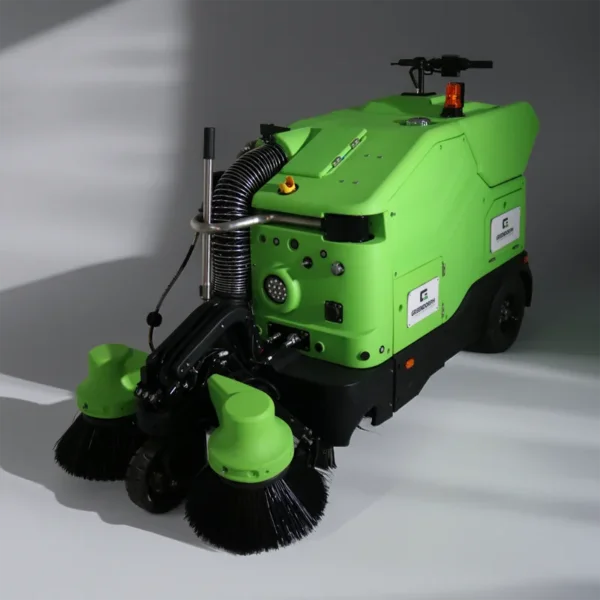
Our specialized Greendorph Omniclean Urban Street Sweeper YJ80 is engineered specifically to bridge the gap between indoor and outdoor cleanliness needs. This semi-autonomous, multi-functional floor cleaner adapts to different surface textures smoothly, ensuring uniform cleanliness across every zone. This versatile design allows a single unit to handle heavy outdoor litter and fine indoor dust with equal efficiency.
Navigating Restrictive Spatial Layouts with Agile Turning Geometries
Tight storage aisles, narrow pedestrian corridors, and busy building entrances present major navigation obstacles for oversized cleaning machinery. Large utility trucks can easily strike decorative columns or block emergency exits, causing costly structural property damage and logistical delays. Ground teams require compact, highly agile utility platforms engineered to navigate around delicate outdoor benches and unexpected path barriers smoothly.
Our compact chassis layouts feature highly responsive steering configurations that allow the machinery to turn inside restricted spaces safely. For instance, the Greendorph Omniclean YJ80 Sweeper is built for complex indoor and outdoor environments where space is highly limited. This spatial agility allows operators to clean right up to the edges of structural pillars without risking accidental collisions.
Lowering Mechanical Complexity to Lower Maintenance Expenses
Traditional internal combustion sweeping trucks feature complex hydraulic lines, drive belts, and fluid reservoirs that require frequent, specialized maintenance. Dusty operating conditions accelerate wear on these moving parts, leading to hydraulic leaks, sudden breakdowns, and expensive repair bills. Transitioning to direct-drive electric systems simplifies the mechanical footprint and prevents these frustrating maintenance issues.
Partnering with a dedicated floor scrubber manufacturer that utilizes brushless electric motors significantly improves long-term fleet reliability. This simplified mechanical design eliminates traditional engine oil changes, spark plug replacements, and high-pressure hydraulic line repairs. Keeping the underlying mechanical architecture simple boosts maximum vehicle uptime, keeping your fleet active on the ground.
Electric Battery Architecture Supports Carbon Reduction and Flexible Operational Planning
Commercial complexes and public venues generally demand round-the-clock facility management, with constant staff activity and material circulation across indoor and outdoor zones. Conventional combustion-powered sweepers continuously generate exhaust pollutants, degrading ambient air quality and gradually corroding building fixtures over prolonged operation. Battery-electric cleaning platforms address these challenges, enabling low-emission operation and aligning with sustainable management targets for modern premises.
High-capacity battery modules sustain up to eight hours of consistent continuous operation. The ample operating range empowers maintenance teams to partition cleaning zones freely and arrange sanitation tasks according to pedestrian flow and work schedules, without interruptions caused by fuel refuelling. Adopting fully electric fleets allows facility operators to cut direct on-site carbon output, implement systematic green maintenance strategies, and achieve lasting optimisation of overall energy expenditure.
Conclusion
Securing high safety standards across modern public spaces requires shifting away from outdated manual tools toward automated electric utility systems. Utilizing advanced, low-emission floor cleaning machines allows property managers to protect floor coatings, control fine dust, and reduce moisture hazards. These quiet, highly maneuverable electric vehicles deliver exceptional cleanliness consistency while lowering annual repair and labor expenses significantly. Our team remains fully dedicated to engineering the robust, sustainable electric tools required to support grounds crews and keep global facilities pristine.