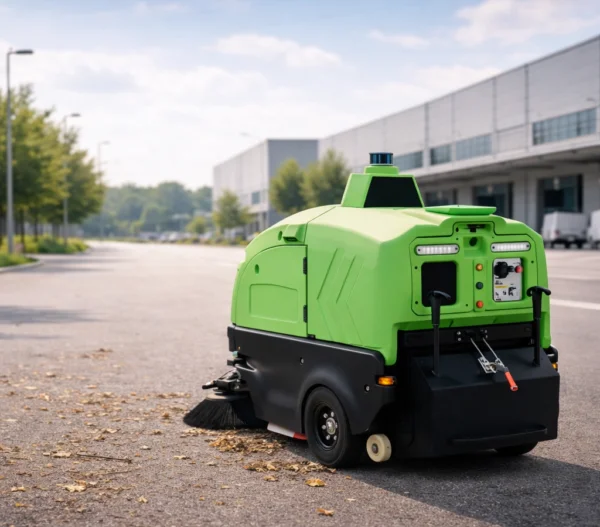
Achieving a uniform standard of cleanliness across expansive public spaces presents a constant operational challenge for property managers. High traffic volumes daily deposit an unpredictable mixture of abrasive dirt, fine silica dust, and moisture onto commercial flooring. When left to manual cleaning methods, variations in worker fatigue and shifting schedules often lead to inconsistent floor care. Implementing a smart robot floor cleaner introduces a standardized mechanical cycle that delivers uniform deep cleaning coverage across every square meter of space.
The dynamic nature of modern commercial hubs requires cleaning systems that can adapt to changing environments without losing efficiency. Unlike traditional manual pushing sweepers, automated systems run on precise, pre-programmed routes that reduce the potential for human error. By exploring the integration of multi-sensor navigation, advanced water management, and heavy-duty battery chemistry, we can understand how modern technology stabilizes daily maintenance. This engineered approach to facility sanitation protects physical flooring assets while creating a safer, more welcoming environment.
Harnessing Sensor Fusion for Uninterrupted Path Planning
Navigating crowded walkways, dynamic retail displays, and temporary physical barriers requires an advanced level of spatial awareness. Older automated systems often struggled in these changing environments, repeatedly halting or losing their position when confronted with new obstacles. Modern autonomous engineering solves this problem by combining multiple sensor types into a single, cohesive navigation framework.
Integrating LiDAR, 3D cameras, and ultrasonic sensors allows a floor cleaning robot to map its surroundings in real time and safely avoid obstacles. This high-precision sensor fusion allows the machine to calculate alternative paths instantly, ensuring continuous cleaning with minimal human intervention. Our team focuses on refining these spatial algorithms to keep operations running smoothly, even during busy daytime hours.
Mitigating Dust Storms Through Advanced Suppression Physics
Dry mechanical sweeping across concrete or asphalt pavements can easily stir up fine particulate matter, creating unpleasant dust clouds. These airborne particles settle back onto surrounding surfaces, degrade indoor air quality, and irritate building occupants. Effective dust control relies on a balanced system that binds fine dust using targeted water sprays before sweeping.
Using integrated dust suppression and misting systems reduces airborne particles, enhances air quality, and minimizes rework, ensuring your automatic floor cleaning machine maintains cleaner floors efficiently. At Greendorph, we design our suction channels to seal tightly against the floor, trapping fine debris securely inside. This dust control mechanism keeps the surrounding air clean and pleasant, making it perfect for indoor facilities.
Achieving Uniform Chemical and Fluid Distribution
Standard manual mopping often applies inconsistent amounts of water and cleaning chemicals, leaving behind slippery puddles or dry, uncleaned patches. Excess water can damage sensitive wood or laminate flooring, while too little water fails to lift stubborn grease and dirt. Automated systems solve this issue by using smart fluid pumps to control exactly how much water is used.
Using electronic fluid valves allow even distribution of water and detergents over every square meter of flooring within your facility. This precise control supports quick drying times, reducing the risk of pedestrian slip-and-fall accidents in busy public zones. We focus on optimizing this fluid balance to help facilities maintain pristine, uniform floors with minimal waste.
Maximizing Daily Operational Endurance with Lithium Power
Keeping up with extensive cleaning routes across sprawling industrial hubs requires steady, uncompromised energy storage. Traditional lead-acid batteries degrade rapidly under heavy daily usage and require regular water top-offs and dedicated, well-ventilated charging areas. Transitioning to advanced lithium iron phosphate batteries provides continuous energy output and supports rapid opportunity charging.
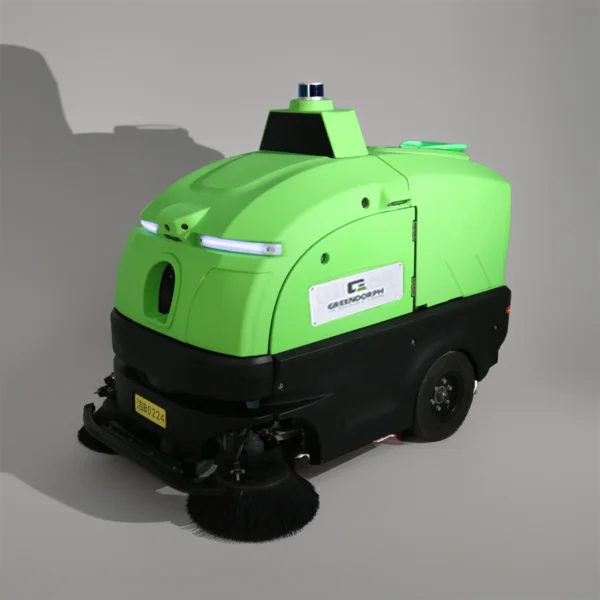
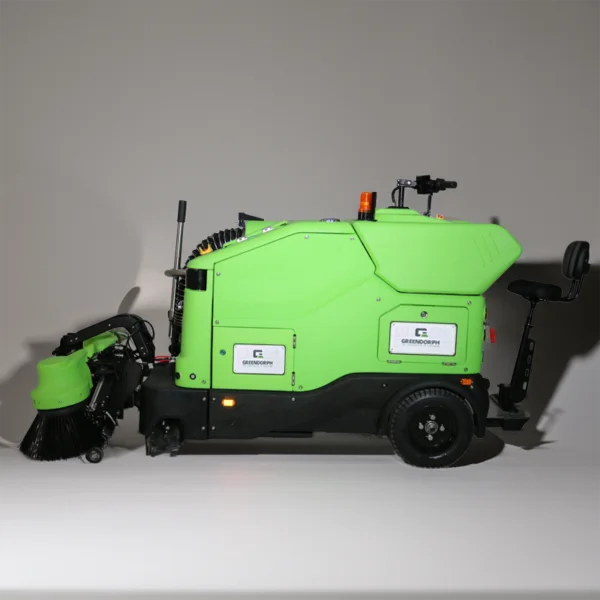
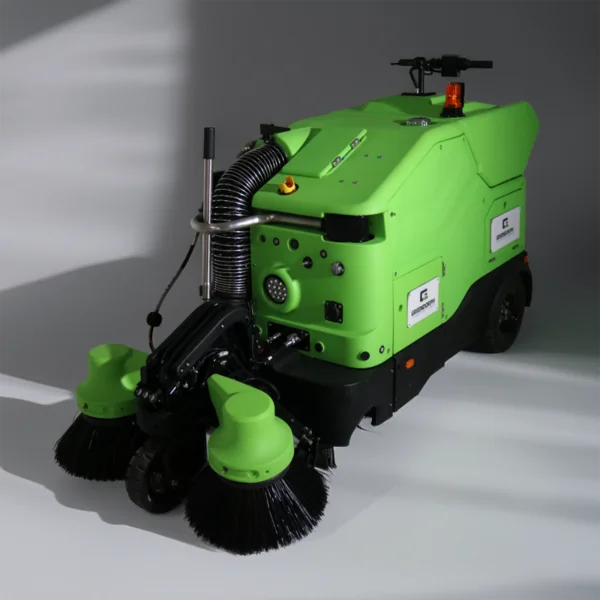
Modern lithium battery packs support fast opportunity charging during scheduled operator breaks, keeping your equipment active and productive. For instance, our specialized Greendorph Omniclean YJ80 model is engineered to provide long operational runtimes across complex indoor and outdoor spaces. This semi-autonomous & multi-functional floor cleaner supports thorough completion of your daily facility cleaning routes while lowering the risk of power failure during operation.
Protecting Delicate Pavement from Heavy Structural Loading
Many modern commercial facilities feature decorative tiled paths, polished stone pathways, and delicate raised flooring systems. Operating heavy, combustion-engine cleaning trucks over these surfaces can crack expensive stone tiles and damage underlying structures. Choosing lightweight, battery-powered equipment is essential for protecting these high-value architectural features.
By combining lightweight composite materials with smart weight-distribution frames, we help our equipment protects your delicate floors. Our low-pressure tires prevent surface scratching and cracking, allowing our machines to work safely across any sensitive layout. At Greendorph, we prioritize structural protection, helping property managers preserve their high-value floor finishes over the long term.
Reducing Mechanical Complexity to Save on Repair Costs
Traditional internal combustion sweeping trucks feature complex hydraulic lines, belts, and fluid reservoirs that require frequent, specialized maintenance. Dusty operating conditions accelerate wear on these moving parts, leading to sudden breakdowns, fluid leaks, and expensive repairs. Transitioning to simple, direct-drive electric systems simplifies the mechanical footprint and prevents these frustrating maintenance issues.
Floor cleaning robot platforms equipped with brushless electric motors feature fewer wear-prone mechanical assemblies. Unlike combustion-driven sweepers, this electric setup removes recurring service work linked to fuel-powered machinery, such as oil servicing, spark plug inspection and fixing hydraulic pipeline leakage. Streamlined mechanical layouts ease routine maintenance burdens, support stable equipment operation and assist facility teams in controlling ongoing service expenditures.
Optimizing Labor Allocation Through Smart Automation
Persistent labor shortages and high employee turnover make it increasingly difficult for facilities to maintain consistent daily cleaning schedules. Introducing a smart robot floor cleaner allows managers to automate repetitive, time-consuming sweeping tasks, ensuring consistent floor care. This technological shift allows your valuable human staff to focus on complex, high-priority maintenance projects.
Our advanced autonomous machines handle navigation, self-charging, and automated dumping effectively on their own, requiring minimal manual supervision. This reliable performance maintains consistent cleaning outcomes while keeping your facility’s daily labor allocation highly efficient. Partnering with our specialized team helps commercial properties run smooth, predictable, and worry-free maintenance programs.
Conclusion
Transitioning to automated electric cleaning systems is a vital step toward building smarter, cleaner, and more sustainable commercial facilities. Moving away from manual cleaning routines helps properties cut labor costs, reduce water consumption, and reduce carbon emissions. Choosing compact, quiet, and highly maneuverable electric sweepers protects your flooring assets while keeping operations highly reliable. At Greendorph, we are dedicated to providing the reliable autonomous solutions that help commercial and industrial facilities maintain tidy, well-kept premises.