Managing large industrial complexes or multi-use commercial facilities requires a meticulous approach to asset protection and occupational safety. Daily operational traffic leaves behind heavy dust, packing debris, oil residues, and fine particulate matter that degrade both flooring surfaces and indoor air quality. Leaving these materials untreated creates micro-abrasions on concrete sealants and increases the risk of workplace slips or equipment wear. Utilizing specialized floor cleaning machines offers facility managers a reliable, systematic method for mitigating these hidden operational risks.
Different facility layouts—ranging from narrow transit aisles to expansive open-air loading docks—demand distinctly varied mechanical solutions. Relying on manual sweeping is highly impractical for handling several thousand square meters of space on a daily basis. By analyzing structural maneuverability, battery chemistry, and dust containment physics, procurement teams can make highly informed investments. Selecting equipment that matches your specific site parameters helps steady performance and protects your long-term maintenance budget.
Assessing Spatial Versatility Across Mixed Indoor and Outdoor Zones
Commercial sites frequently present a challenging mix of smooth indoor surfaces and rough, uneven outdoor pavements. Transitioning between these distinct areas usually requires separate fleets, which increases asset costs and complicates worker training schedules. Modern procurement focuses on finding single, highly adaptive equipment platforms capable of handling both environments seamlessly.
A versatile machine for cleaning floors must feature durable chassis components and heavy-duty suspension to absorb transitions over threshold ramps. Our development team addresses this operational need by building robust, multi-functional architectures capable of handling complex layouts effectively. At Greendorph, we prioritize structural adaptability to enable your maintenance teams can move safely from indoor warehouses to outdoor walkways.
Understanding the Mechanics of Advanced Dust Control Systems
Sweeping dry commercial flooring often generates large clouds of fine airborne dust, posing health risks to nearby workers. High-efficiency dust control relies on matching high-velocity vacuum suction with advanced multi-stage fabric filtration systems. This design keeps fine particulate matter trapped within the machine hopper instead of venting it back into the warehouse.
Robust, reusable filter membranes help the equipment sustain steady suction performance during lengthy high-intensity working cycles. We incorporate specialized mechanical filter cleaning systems to prevent debris from packing into the pleats during operation. This focus on clear airflow pathways protects your facility’s indoor air quality and keeps surrounding inventory free of dust.
Evaluating Battery Configurations and Operational Endurance
Maintaining expansive distribution hubs requires steady, uncompromised energy storage that can support long cleaning runs. Conventional lead-acid batteries degrade rapidly under heavy daily usage and demand regular fluid top-offs and dedicated ventilation spaces. Upgrading to high-density lithium iron phosphate batteries reduces these maintenance hassles while providing excellent operational uptime.
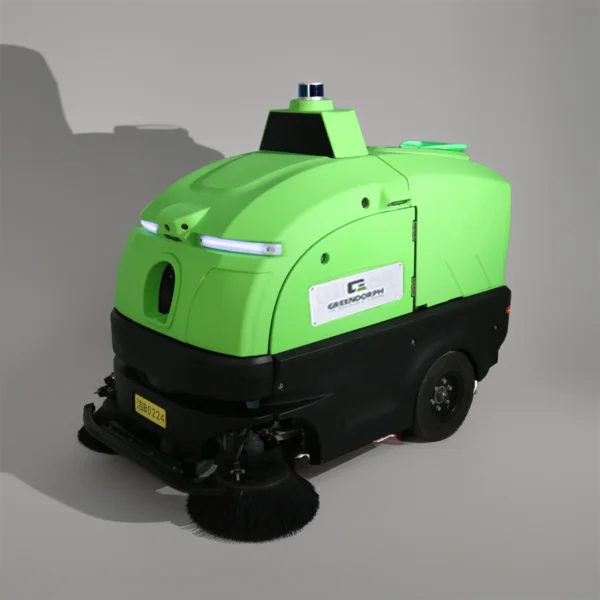
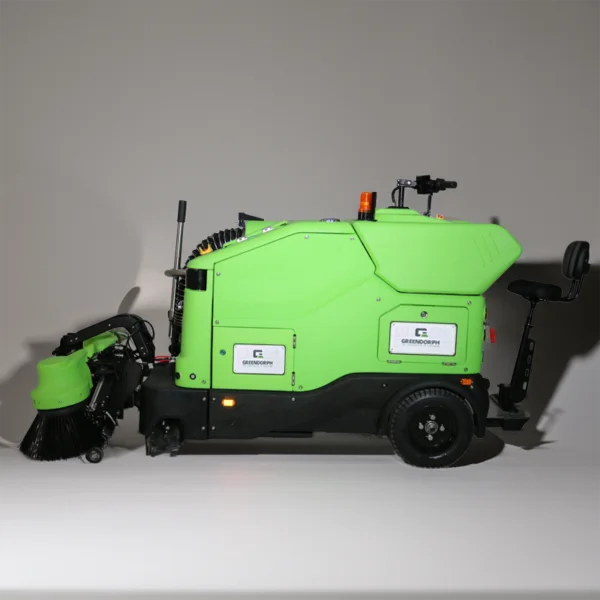
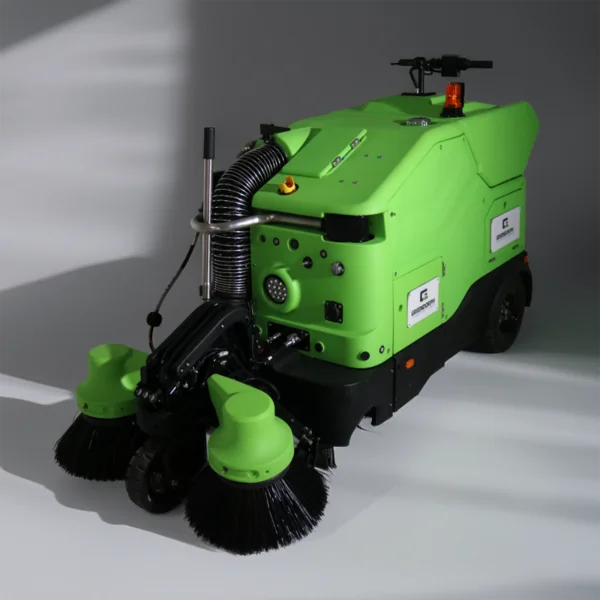
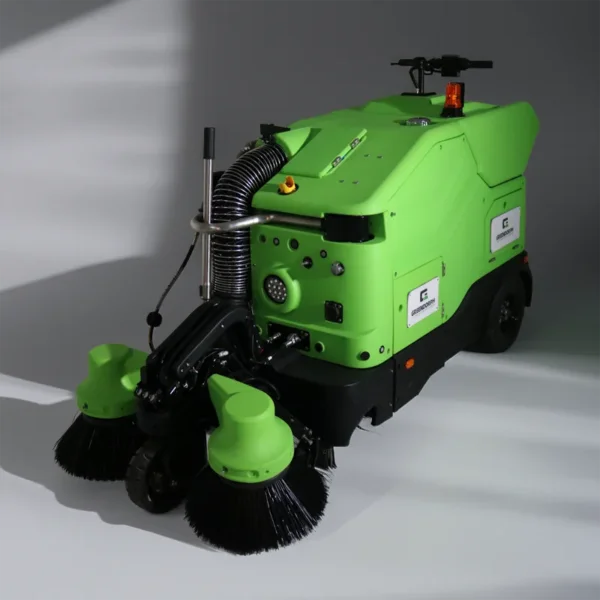
Modern lithium battery packs support fast opportunity charging during scheduled employee lunch breaks, keeping the fleet ready for action. For instance, our specialized Greendorph Omniclean YJ80 model is engineered to provide long operational runtimes across complex indoor and outdoor spaces. This semi-autonomous & multi-functional floor cleaner helps your daily facility routes are completed thoroughly with minimal risk of mid-shift power loss.
Analyzing Maneuverability and Turning Geometries in Restrictive Layouts
High-bay storage racks and tight assembly lanes optimize vertical space but leave very little room for bulky utility vehicles. A cleaning vehicle with a wide chassis or a large turning radius risks striking structural supports or inventory pallets. Buyers must look for compact wheel layouts that can turn sharply inside narrow storage aisles.
Integrating compact frames with intelligent steering mechanics allows operators to navigate tight corners without slowing down production. We focus on optimizing the physical footprint of our equipment to facilitate smooth movement around unexpected floor obstacles. This precise spatial design allows a compact machine for cleaning floors to clean right up to the edge of your storage racks.
Reviewing Semi-Autonomous Support and Labor Allocation Features
Persistent labor shortages and high employee turnover create ongoing challenges for managing heavy-duty facility cleaning routines. Introducing smart semi-autonomous technology helps bridge this gap by streamlining repetitive paths and minimizing the physical strain on operators. This technological shift allows your valuable human staff to focus on more complex, specialized maintenance tasks.
Smart onboard driver-assist systems help maintain consistent cleaning speeds and prevent accidental collisions in busy transit zones. At Greendorph, we build smart, supportive guidance systems that turn tedious sweeping paths into safe, predictable, and highly efficient workflows. This balanced approach to automation helps your facility maintain high sanitation standards while keeping your labor allocation efficient.
Minimizing Noise Output in Quiet Public-Facing Environments
Operating loud, combustion-powered cleaning machinery in corporate plazas or retail pathways creates uncomfortable noise disruptions. High decibel levels restrict your cleaning schedule to limited daytime windows, complicating logistics and lowering overall productivity. Switching to quiet, battery-powered electric motors allows you to run cleaning operations smoothly at any hour of the day or night.
A quiet, battery-powered floor cleaning machines fleet operates smoothly in the background without disturbing nearby employees, customers, or visitors. We focus on insulating our electric vacuum fans to keep operational noise levels remarkably low during deep cleaning tasks. This quiet performance gives facility managers the flexibility to schedule routine maintenance whenever it makes the most sense.
Reducing Mechanical Complexity to Save on Maintenance Costs
Traditional sweeping trucks feature complex hydraulic lines, drive belts, and fluid reservoirs that require frequent, specialized maintenance. Dusty operating conditions accelerate wear on these moving parts, leading to hydraulic leaks, sudden breakdowns, and expensive repair bills. Transitioning to direct-drive electric systems simplifies the mechanical footprint and prevents these frustrating maintenance issues.
Our commercial floor cleaners adopt brushless electric drive architecture, which minimises vulnerable moving assemblies. Compared with conventional combustion sweepers, such setups lower routine servicing work linked to oil top-ups, spark plug inspections and hydraulic line maintenance. Simplified mechanical structures bring lighter service burdens, allowing cleaning fleets to sustain steady operation and contain cumulative service costs over years of deployment.
Conclusion
Stop letting inefficient sweeping slow down your operations. Choosing the right equipment means nailing space compatibility, dust control, and battery longevity—all at once. Compact electric sweepers outperform manual labor in expansive facilities, offering the agility to navigate tight spaces and the suction power to tackle heavy debris. With whisper-quiet operation, they protect your staff, improve air quality, and cut costs day after day. Greendorph builds smart, rugged cleaning solutions designed to keep your facility running at its best—safely, sustainably, and affordably.