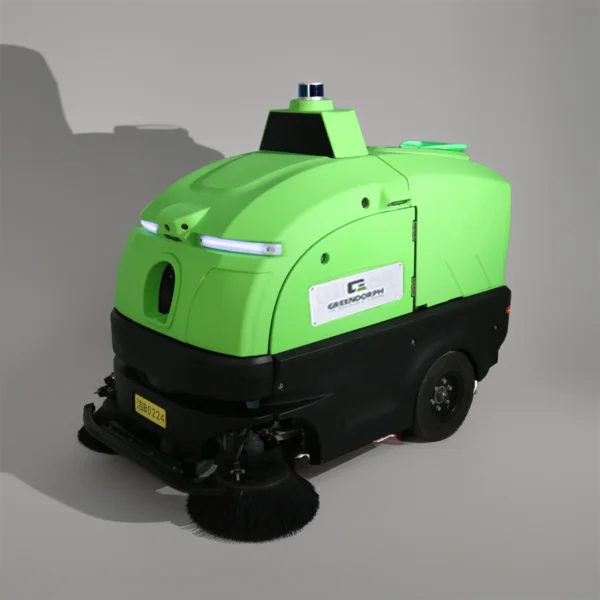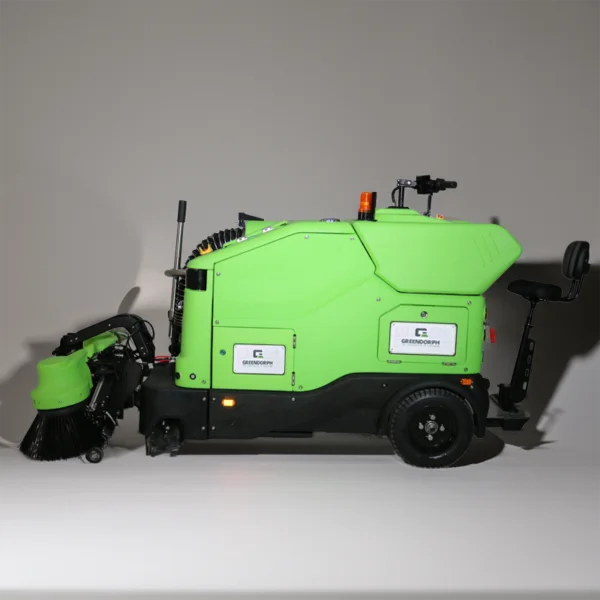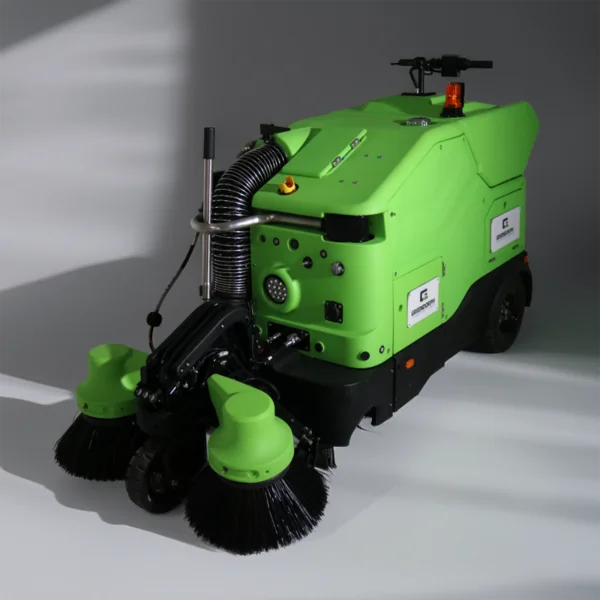
Maintaining open municipal parks, sweeping collegiate paths, and managing expansive residential communities involves a continuous struggle against natural and synthetic debris. Winds constantly scatter heavy autumn leaves, loose gravel, and fine sand across pathways, creating immediate slip hazards for pedestrians. Leaving these materials unmanaged causes them to act as abrasive elements under foot traffic, breaking down costly surface coatings over time. Deploying a specialized outdoor robot cleaner offers property managers a structured, repeatable framework to preserve public walkways efficiently.
Different public spaces present distinct architectural challenges, from the tight, winding paved paths of botanical gardens to expansive community plazas. Traditional manual sweeping crews are highly inefficient and expensive when tasked with covering tens of thousands of square meters daily. Property managers must evaluate specific machine parameters, including multi-sensor path planning, dust containment systems, and direct electric drivetrains. Selecting equipment that aligns precisely with your specific local environment secures long-term property cleanliness while protecting the operational budget.
Managing Varied Debris Profiles in Shared Public Parklands
Public parks experience a diverse mix of organic accumulation and consumer waste that shifts drastically with the seasons. Spring blossoms, wet autumn leaves, and dropped twigs gather quickly along concrete curbs, blocking drainage grates and causing localized pooling. If these organic masses are left to rot on walkways, they create slippery surfaces that threaten pedestrian safety.
Regularly deploying a mechanical outdoor power sweeper clears these heavy layers before they can impact park aesthetics or public safety. Our engineering team focuses on designing high-torque brush configurations that lift compacted leaves and twigs in a single pass. This active clearing approach maintains inviting and secure shared public walkways for families and runners
Navigating Tight Architectural Spaces Across Educational Campuses
Academic campuses feature complex networks of narrow sidewalks, bike lanes, outdoor seating patios, and decorative stone monuments. Operating full-sized diesel utility trucks in these tightly packed environments presents high collision risks and disrupts the peaceful student environment. Facility directors require low-profile, highly agile machinery engineered to navigate around delicate brickwork and unexpected structural bottlenecks.
Our compact autonomous chassis designs incorporate advanced steering systems that allow the machinery to spin on a dime safely. For instance, our specialized Greendorph Auto Sweeper YJ130 model is designed to navigate narrow sidewalks, public walkways, and busy industrial paths with ease. This precise tracking s that tight campus corridors receive a complete clean without risking any structural damage to university property.
Mitigating Dust Storms and Preserving Suburban Air Quality
Dry mechanical sweeping across public walkways can easily stir up thick dust clouds, creating inhalation hazards for nearby residents. Advanced dust control relies on a balanced system that uses fine water misters to bind small particles together right before sweeping. This multi-stage suppression prevents fine concrete dust from escaping back into the air, keeping local community environments healthy.
Using high-performance filters keep fine concrete or drywall dust sealed within the machine during operation. At Greendorph, we prioritize clean-air filtration systems to help facilities maintain excellent indoor and outdoor air quality. This clean approach to dust control keeps the surrounding air fresh, comfortable, and healthy for your community’s occupants.
Evaluating Power Systems for Uninterrupted Multi-Zone Cleaning
Keeping up with expansive community developments requires steady, reliable utility power to support extensive driving routes are completed without interruption. Traditional lead-acid batteries require high maintenance, take hours to charge, and suffer from short operational lifespans under heavy daily workloads. Upgrading to high-density lithium iron phosphate batteries reduces these maintenance hassles while providing exceptional fleet readiness.
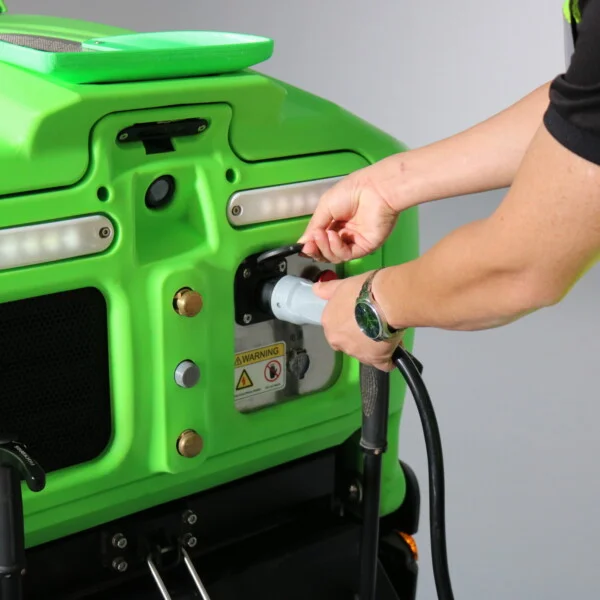
Modern lithium-ion batteries support rapid opportunity charging during scheduled operator breaks, keeping your equipment active and productive. Our high-capacity battery configurations are designed to run continuously for 6-8 hours on a single charge. This extended operational endurance allows your facility teams to complete expansive outdoor loops with minimal interruption.
Lowering Annual Operational Budgets Through Electric Propulsion
Outdoor cleaning fleets serving parks and residential communities continuously operate amid fallen foliage, sand and grit that aggravates wear on complicated mechanical assemblies. Conventional fuel-driven sweepers rely on intricate hydraulic circuits and multiple rotating components that demand recurring professional servicing. Switching to direct-drive electric architecture streamlines the overall mechanical setup and cuts down common failure risks triggered by harsh outdoor working environments.
Our outdoor robotic sweepers adopt brushless electric drive frameworks to reduce vulnerable moving assemblies. Free from periodic engine fluid replacement and hydraulic system upkeep required by combustion machinery, the equipment maintains steady operation amid constant exposure to outdoor debris. Such streamlined construction curbs unplanned shutdown events, stabilizes daily cleaning operations and helps municipal and community administrators contain recurring operational expenditures.
Safeguarding Delicate Hardscapes from Heavy Vehicle Damage
Decorative brick surfaces, interlocking pavers, and historic park paths are not engineered to support full-sized municipal cleaning vehicles. Heavy diesel trucks can easily crack expensive paving stones, distort underlying soil basements, and cause permanent structural damage. Selecting lightweight, battery-powered equipment is essential for preserving these high-value architectural installations over the long term.
Combining lightweight composite materials with smart weight-distribution frames lets our machines protect your delicate paths. At Greendorph, we design our low-emission cleaning robots to operate smoothly without putting excessive pressure on fragile public pathways. This careful engineering allows communities to maintain immaculate walkways while reducing the risk of costly pavement repairs.
Optimizing Workforce Productivity with Intelligent Autonomy
Community and park maintenance teams consistently struggle with recruitment and retention for physically taxing, repetitive pavement sweeping work. Intelligent autonomous sweeping solutions reshape the framework of public space sanitation by automating routine ground maintenance tasks. This transformation frees on-site staff from monotonous recurring labor and lets teams prioritize landscape upkeep, public facility inspection and resident service work.
Open public areas feature randomly placed pedestrians, movable recreational facilities and irregular barriers, limiting the effectiveness of rigid pre-set travel routes. Our autonomous sweeping equipment leverages adaptive navigation technology to execute continuous debris clearance with minimal human oversight, equipped with real-time obstacle identification and flexible route adjustment capabilities. Deploying this intelligent hardware delivers stable sanitation results across sprawling public zones and realizes more reasonable allocation of community maintenance manpower.
Conclusion
Public sanitation is evolving—manual brooms are out, smart electric sweepers are in. Agile, quiet, and low-carbon, they overcome labor shortages, protect stone surfaces, and perform consistently across large public areas. We at Greendorph deliver the eco-friendly automation that makes public spaces cleaner, safer, and more sustainable.