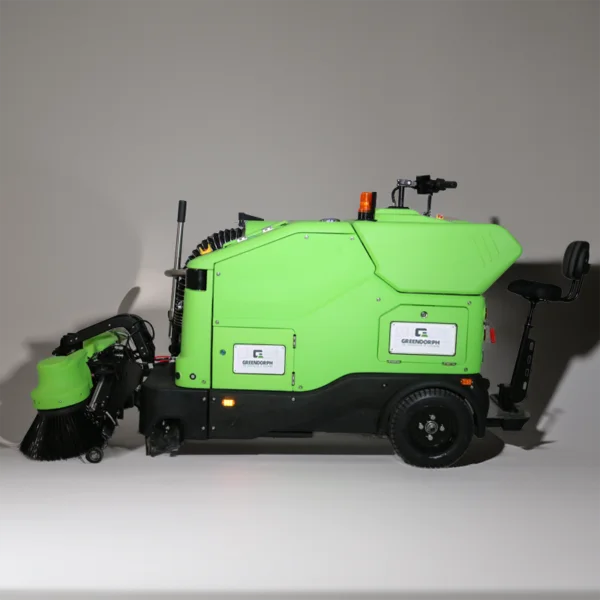
Maintaining high hygiene standards across sprawling commercial layouts requires a deep understanding of mechanical wear, spatial limits, and labor efficiency. Large-scale properties like transit hubs, shopping plazas, and industrial parks face continuous soil accumulation, windblown trash, and fine dust particles. Leaving these abrasive contaminants on hardscapes grinds down protective surface coatings and creates potential slip hazards. Utilizing a specialized outdoor ride on sweeper offers facility managers a reliable, systematic method for keeping expansive paved pathways clean and safe.
Modern commercial environments present a dynamic mix of tight pedestrian walkways, low-clearance parking structures, and wide-open outdoor plazas. Traditional walk-behind sweepers are often too slow to cover these massive physical areas, while large highway trucks cannot maneuver safely inside. Evaluating critical engineering parameters—such as mechanical drive systems, turning geometries, and dust suppression physics—helps procurement teams make highly informed investments.
Assessing Spatial Adaptability Across Dynamic Architectural Layouts
Commercial properties often feature varying floor plans that require highly flexible cleaning methods to keep operations running smoothly. Wide-open storage areas are best cleared using rapid, high-capacity machinery, while tight retail corridors and entryways demand slow, precise handling. Relying on single-mode utility vehicles can lead to cleaning gaps, forcing teams to purchase multiple expensive machines.
Modern facility managers prioritize multi-functional systems that adapt to different operational demands with a single capital asset. We address this need for versatility by engineering multi-mode drive systems directly into our commercial cleaning equipment. At Greendorph, we design our platforms with adaptive operator controls that simplify transitions from wide-open pavements to narrow public walkways.
Understanding the Physics of High-Efficiency Dust Suppression
Dry pavement sweeping across commercial plazas and transit pavements often disturbs microscopic particulate matter, compromising ambient air quality and posing comfort and health risks to passing pedestrians. Effective outdoor sanitation no longer relies on simple brute suction alone, but on a scientific dust-locking workflow that suppresses dust at the source. Our integrated wet misting system pre-binds dry, floating fine particles before mechanical sweeping takes place, avoiding secondary dust dispersion across crowded public zones.
Complementing pre-sweep humidification, multi-layer high-density fabric filtration captures ultra-fine contaminants throughout continuous commercial operation. This closed-loop dust management structure prevents particulate blowback and maintains stable purification performance during long shifts. By combining wet suppression and high-efficiency filtration, our sweeping systems deliver cleaner, safer and more inhabitable environmental conditions for high-traffic commercial venues.
Designing Flexible Drive Controls for Multi-Zone Operations
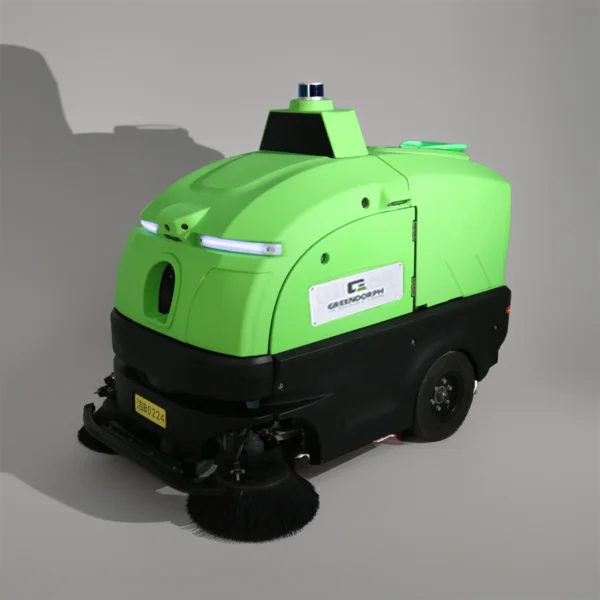
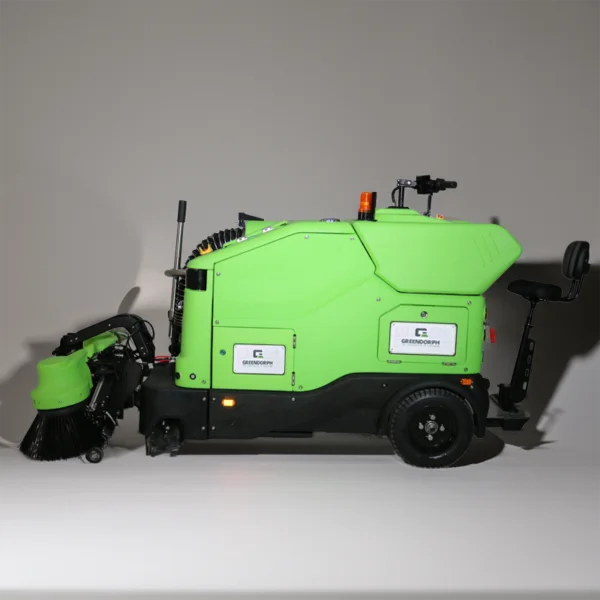
Busy public spaces require a balance between manual operation and smart automated driving features to maximize daily labor efficiency. For instance, our advanced Greendorph YJ80 model is built to handle a wide range of urban cleaning demands. This multi-functional unit features three operator-friendly modes: manual ride on sweeper machine, auto-follow, and towed traction.
These flexible control modes allow your maintenance crews to handle different environments with ease and minimal physical strain. Our design team focuses on making these control transitions seamless, ensuring that operators can switch modes instantly depending on local traffic. This smart versatility turns a standard utility vehicle into a highly responsive, multi-zone asset.
Evaluating Battery Configurations and Operational Shift Endurance
Keeping up with busy warehouse operations demands steady, uninterrupted cleaning power to achieve all areas are swept thoroughly. Traditional lead-acid batteries require high maintenance, take hours to charge, and degrade quickly under heavy daily workloads. Switching to advanced lithium-ion battery configurations provides continuous power output and supports rapid opportunity charging.
Modern lithium-ion batteries support fast opportunity charging, allowing operators to plug in the machine during scheduled operator breaks. This flexible power capability keeps your commercial cleaning schedules stay on track and reduces unplanned downtime. We build our electric drivetrains to use battery power highly efficiently, helping teams cover maximum area on a single charge.
Analyzing Mechanical Durability and Rugged Structural Materials
Industrial warehouses and busy public plazas present tough physical challenges, including rough pavement joints, heavy gravel, and speed bumps. Lightweight plastic chassis designs suffer rapid wear and structural cracking when subjected to these daily physical impacts and demanding workloads. Buyers must look for heavy-duty steel framing, impact-resistant bumpers, and rugged wheel assemblies engineered for commercial use.
Investing in a robust, high-performance outdoor ride on sweeper protects your capital investment and delivers reliable performance over many years. At Greendorph, we prioritize physical structural strength by combining reinforced framing with heavy-duty synthetic brushes. This focus on rugged engineering minimizes physical damage, keeping your equipment active and lowering your annual repair costs.
Comparing Brush Geometries for Multi-Debris Collection
Commercial parking structures and outdoor spaces accumulate a challenging mix of waste, ranging from heavy gravel to soft organic leaves. An efficient mechanical sweeping system must utilize variable brush pressures to lift different debris types without causing pavement wear. Matching the main broom’s rotation speed to your specific floor texture enables thorough collection in a single pass.
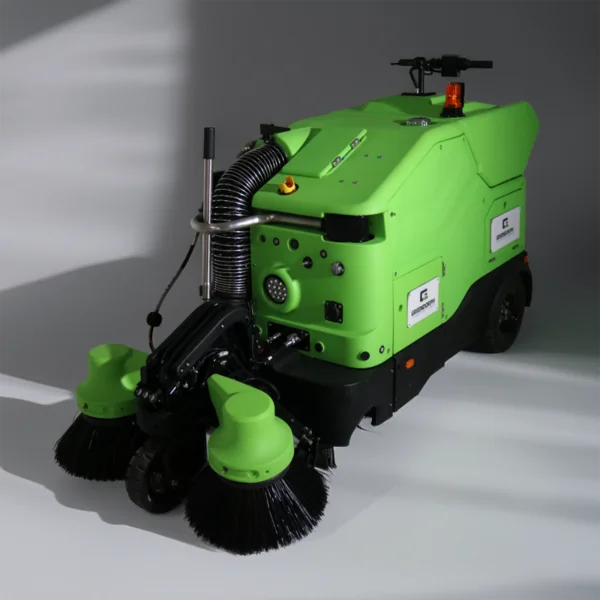
Using adjustable side brushes allows operators to clear debris from expansion joints, deep gutters, and tight wall edges easily. We focus on optimizing brush contact angles to allow our machinery lifts heavy debris and fine sand with equal efficiency. This precise mechanical calibration keeps your pathways clean while significantly extending the operational lifespan of the brushes.
Minimizing Maintenance Complexity with Electric Drivetrains
Heavy-duty outdoor cleaning environments filled with sand, dust and debris severely test the stability of conventional fuel-powered sweeping equipment, whose intricate hydraulic assemblies and wearable transmission parts are prone to abrasion, leakage and frequent failures. Complex mechanical structures bring continuous professional maintenance workloads and unpredictable operational costs for facility fleets. Upgrading to streamlined direct-drive electric architecture effectively eliminates these pain points for long-term commercial ground upkeep.
Engineered for rigorous all-day commercial operation, our advanced ride on vacuum cleaner units adopt premium brushless electric drive systems to reduce wearable mechanical components. Removing traditional engine assemblies and high-pressure hydraulic systems cuts out routine maintenance items such as oil replacement and component tuning. The optimized mechanical structure delivers superior operational stability in dusty industrial and commercial scenarios, minimizing unplanned downtime and helping facility teams sustain active, cost-effective cleaning fleets year-round.
Conclusion
Modern facility maintenance requires a strategic transition away from loud, high-emission diesel sweepers toward agile and efficient electric utility assets. Selecting certified machinery equipped with quiet electric drivetrains protects the local environment while significantly reducing daily labor costs. Implementing these robust, multi-mode machines keeps your walkways safe, improves air quality, and lowers your long-term maintenance expenses. At Greendorph, we are dedicated to building the reliable, low-emission cleaning solutions required to keep global commercial properties pristine and safe.